
By Jared Medrano, Founder · · Updated · 10 min read
How to Clean a Pool Deck (Safely)
Learn to clean your pool deck safely by identifying the material and using the lowest effective pressure.

If you are wondering how to clean a pool deck without etching the stone or fouling the water, the answer starts with knowing the material under your feet, then using the lowest effective pressure - often a soft wash. I’m Jared Medrano, and at Gem Pro Exterior Solutions we clean pool decks across the Dallas - Fort Worth area. The question I hear on nearly every job is, “Will pressure washing damage my deck or get chemicals in the pool?” The honest answer: it depends on the surface and the method, but done right, it is completely safe.
You want a deck that looks clean without etching the stone or flooding the pool with runoff. You’ll get a clear, material-specific plan you can follow yourself, plus the signs that tell you when to call a pro. We’ll walk through identifying your deck type, the step-by-step process for concrete, the DIY mistakes that cause permanent damage, and a maintenance rhythm that works in North Texas.
Key Takeaways- The best way to clean a concrete pool deck is a low-pressure soft wash with a pool-safe sodium hypochlorite mix, not a high-PSI blast.- Travertine and cool deck surfaces demand a soft-wash-only approach to avoid permanent etching or peeling.- Effective pool deck algae removal depends on proper dwell time and managing runoff away from the pool water.- DIY pool deck cleaning works for small concrete decks under 800 square feet; larger or stone decks usually call for a professional soft-wash crew.- An annual cleaning rhythm fits most North Texas homes, while commercial properties often need quarterly service.
First, Know Your Deck: Why the Material Changes Everything
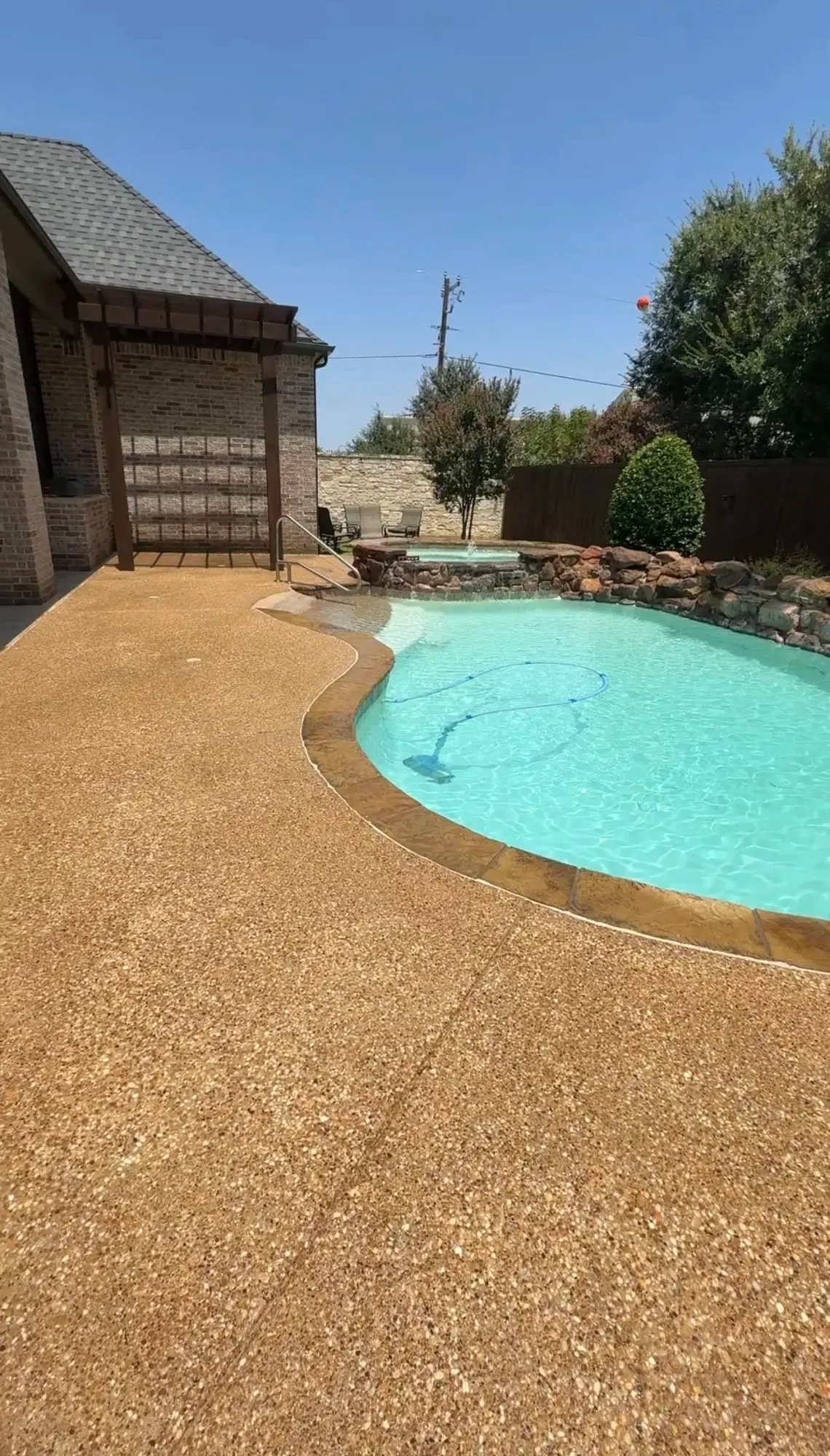
The single biggest mistake I see is treating every pool deck like a plain concrete slab. In DFW backyards, we encounter three distinct surfaces, and each one demands a different cleaning method. Using a high-pressure tip on the wrong material can etch the surface permanently, and that damage cannot be undone with another cleaning.
Concrete
A standard broom-finished or stamped concrete pool deck is the most forgiving. It can handle a consumer-grade pressure washer when you use the right nozzle and technique. The main risk here is not the pressure but the runoff. You must manage where the dirty water and cleaning solution go. We always start by wetting the landscaping and pool deck edges to dilute anything that runs off.
Travertine and Natural Stone
Travertine is common in higher-end DFW builds, and it is unforgiving. It is a calcium-based stone that reacts with acidic cleaners and etches under high pressure. For travertine, we use the same low-pressure soft-wash method we use on house siding. A plant-safe mix of sodium hypochlorite and a surfactant, applied with a pump sprayer, lifts the organic growth without cutting into the stone. We never put a pressure washer tip closer than 12 inches to travertine.
Cool Deck and Spray Textures
Cool deck - that textured, slip-resistant acrylic coating - is designed to stay bearable under a Texas sun. It also wears away under aggressive cleaning. The texture traps dirt, but a high-pressure stream will peel the coating right off the concrete below. Our crews treat it the same as natural stone: soft wash only, with a wide fan tip for rinsing at very low pressure.
Can You Pressure Wash a Pool Deck? Yes, But Not Every One
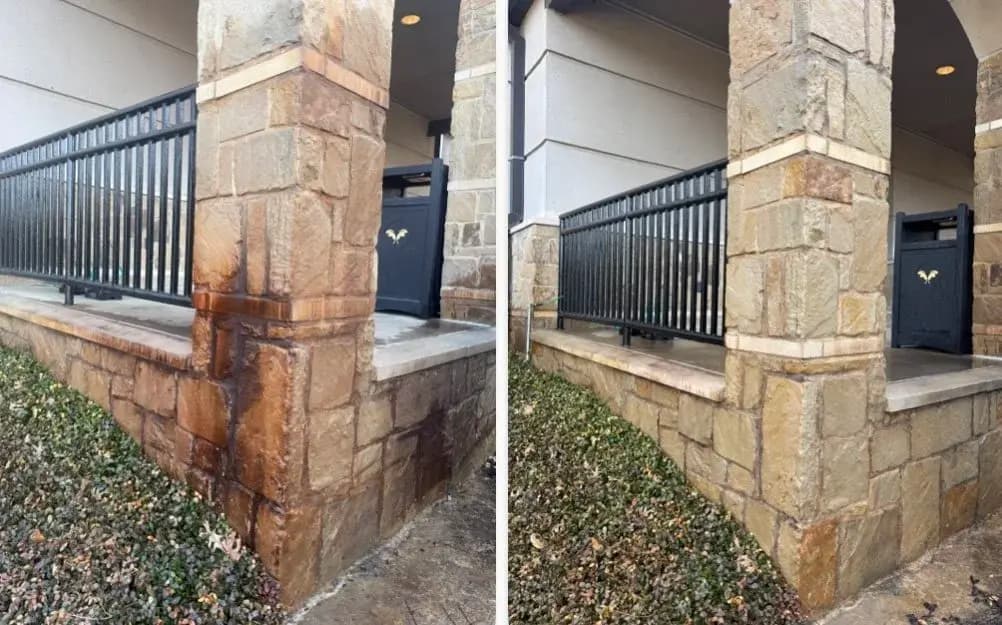
You can pressure wash a concrete pool deck safely. For travertine, cool deck, or any sealed surface, you should not. The distinction comes down to surface hardness. In our experience, concrete tolerates a mid-range fan tip setting on a consumer-grade machine. Softer stone and textured coatings do not - we keep pressure low on anything that is not broom-finished concrete.
When I train a new crew member, the first thing I hand them is not the wand. It is a pair of pool skimmer socks. We place them over the return jets and skimmer basket to catch any debris that gets kicked up. It is a small step that prevents a much larger headache. If you are doing this yourself, cover your skimmer and consider dropping the pool’s water level an inch or two below the tile line to give yourself a buffer against runoff. The goal is to keep every drop of cleaning solution out of the pool water.
Step-by-Step: How to Clean a Concrete Pool Deck Yourself
This process works for broom-finished and stamped concrete. It assumes you have a consumer-grade electric or gas pressure washer, a pump sprayer, and basic PPE.
- Clear the deck and pre-rinse. Move all furniture, potted plants, and grills off the deck. Sweep loose debris. Pre-rinse the entire deck with a garden hose to saturate the concrete. Dry concrete absorbs cleaning solution too fast, so it dries before it can work. Wet the landscaping and pool coping thoroughly.
- Apply a pool-safe cleaner. Mix a sodium hypochlorite solution with water and a surfactant in a pump sprayer. We use professional-grade solutions designed for exterior cleaning and follow proper application and rinsing practices to protect surrounding landscaping. This is the same mix we use on house washing jobs. Never use a cleaner that contains acids or solvents near a pool. Apply the solution evenly, working in manageable sections so it does not dry on the surface. Let it dwell for 5-10 minutes, but never let it puddle.
- Agitate, rinse, and protect the pool water. For textured concrete, a medium-bristle push broom on a pole helps work the solution into the low spots. Rinse with a 25-degree fan tip, keeping the nozzle at least 8 inches from the surface. Direct your rinse water away from the pool and toward a yard drain or lawn area. A spotter with a hose can keep the pool coping wet to dilute any accidental overspray.
Last month, a homeowner in Southlake called us after he had followed a generic DIY video that skipped the pre-rinse. He applied a strong bleach mix to a dry deck, and the solution dried in streaks before he could rinse. The deck looked worse than when he started. We corrected it with a second, properly-managed application, but it cost him a full Saturday and a lot of frustration. The pre-rinse is not a suggestion; it is what makes the chemistry work.
The DIY Mistakes That Cause Permanent Damage
I understand the appeal of handling this yourself. But I also get the calls to fix what goes wrong. These three mistakes show up repeatedly, and they all share one root cause: treating every deck the same.
Etching Soft Stone with Too Much Pressure
Travertine and limestone pool coping are porous. A 0-degree nozzle held close will carve a line you can feel with your fingernail. The damage is instant and permanent. There is no filler that matches the natural variation in the stone. If you are working with natural stone, put the pressure washer away. Use a pump sprayer and a soft brush.
Stripping Sealer Unevenly
Many concrete and paver decks have a clear sealer that enhances color and resists staining. A high-pressure surface cleaner can strip that sealer in patches, leaving a splotchy deck that needs to be stripped entirely and resealed. Once you break the seal, water and dirt get into the pores and the deck stains faster than it ever did before. If your deck has a glossy or slightly darkened look when wet, assume it is sealed and use low pressure.
Letting Runoff and Chemicals Reach the Pool
Chlorine-based cleaners are safe when properly diluted and rinsed, but a concentrated slug of cleaning solution will throw off your pool chemistry. It can spike chlorine levels, bleach a vinyl liner, or irritate swimmers. We use the skimmer sock trick on every pool job. A homeowner can do the same with a nylon stocking over the skimmer basket. It is cheap insurance.
When Cleaning Is a Job for a Professional Soft Wash Crew
Some situations call for a truck-mounted system and a trained eye. If your deck has widespread black or green organic growth, the cause is often poor drainage or heavy shade, and it will come back unless the cleaning is aggressive enough to kill the spores. A homeowner-grade sprayer often fails to reach the required contact time on large areas. For a deeper look at the method we use, see our guide on soft washing vs. pressure washing in Dallas.
Commercial properties and large pool decks present a different challenge. We clean pool decks for apartment communities and HOAs across the metroplex, and the scale makes a pump sprayer impractical. Our soft-wash rigs can apply a consistent solution at low pressure across thousands of square feet in a morning, with a dedicated rinse crew managing runoff. If you are facing a deck larger than about 800 square feet, the time and equipment math tilts toward calling a pro. When we finish a pool deck job, we do a full rinse and a walkthrough with you. You check the coping line and drain runs, and we do not pack up until you are satisfied.
Another threshold is staining from rust, leaf tannins, or fertilizer. Organic growth lifts with sodium hypochlorite, but mineral stains require a different chemistry that must be tested on an inconspicuous area first. If you have orange rust spots or black fertilizer stains, a professional evaluation will tell you what is removable and what is permanent before you spend a weekend scrubbing. That is the honest scope of how to clean a pool deck when the stains go deeper than surface grime. If you are budgeting for the work, our house washing cost guide for Dallas explains the pricing factors that apply to deck cleaning too.
How Often to Clean a Pool Deck in North Texas
Most residential pool decks in DFW need a thorough cleaning once per year. Our climate accelerates organic growth: warm, humid springs feed algae and mildew, and our clay soil stains concrete quickly during heavy rains. A deck that looks clean in February can show black spots by May.
Commercial properties with high foot traffic often need quarterly service. An apartment pool deck that sees hundreds of residents each week collects sunscreen, body oils, and dirt that a yearly cleaning cannot keep up with. We work with property managers to set a schedule that matches their usage and appearance standards. The right rhythm keeps the deck safe underfoot and protects the surface from long-term staining that becomes harder to remove with each passing season.
Frequently asked questions
Is pressure washing safe for my pool deck?
It depends on the material. Pressure washing is safe for concrete pool decks when using a wide fan tip and proper technique. For travertine, cool deck, or sealed surfaces, high pressure can cause permanent etching or peeling. We always match the method to the surface to preserve the deck’s integrity.
Can you remove all stains and discoloration from a pool deck?
No. Exterior cleaning significantly improves appearance by removing surface-level organic growth, dirt, and buildup. Some staining or discoloration may be permanent due to surface age, material composition, or previous improper cleaning attempts. We assess each deck honestly and tell you what to expect before we start.
How can I contact Gem Pro Exterior Solutions?
You can reach us anytime via our contact page or by phone. We aim to respond quickly, usually within one business day. You can also call us directly at 214-471-6720 to discuss your pool deck and get a transparent quote.
What do I need to do to prepare for a professional pool deck cleaning?
We ask that outdoor furniture, décor, and fragile items near the deck be moved or secured prior to our arrival. Clear access to a water spigot helps us work efficiently. We handle the rest, including protecting the pool water and surrounding landscaping.
Do I need to be home during the service?
Not necessarily. As long as we have access to the necessary areas and a water source, services can often be completed without the homeowner present. We provide clear communication before and after the job so you know exactly what was done.
How often should I clean my pool deck?
Most residential properties benefit from a thorough pool deck cleaning once per year. In North Texas, our warm, humid climate means organic growth can appear quickly, so an annual cleaning is a solid baseline. Commercial properties with heavy use may need cleaning quarterly to maintain appearance and safety.
Before you decide whether to DIY or call a pro, run through these checks:
- Identify your deck material: concrete, travertine, or cool deck.
- Check for an existing sealer (does water bead or darken the surface?).
- Assess the size of the job: under 800 square feet is manageable; over that, the time tradeoff is real.
- Look at the staining type: organic growth lifts with chlorine-based cleaners; mineral stains need a different approach.
- Confirm you can manage runoff away from the pool and toward a drain or lawn.
- Be honest about your equipment: a pump sprayer and a consumer-grade pressure washer are enough for concrete, but not for stone. That is the honest scope of how to clean a pool deck yourself.
If your deck is stone, sealed, or larger than you want to tackle alone, we can help. Get a transparent quote for your pool deck cleaning from Gem Pro Exterior Solutions. We serve the entire Dallas - Fort Worth metroplex with a soft-wash approach that protects the surface and your pool. Call us at 214-471-6720 or visit our site to schedule a walkthrough. We pack up when you are satisfied, not before.